How to Create a Cookie Consent Popup in JavaScript

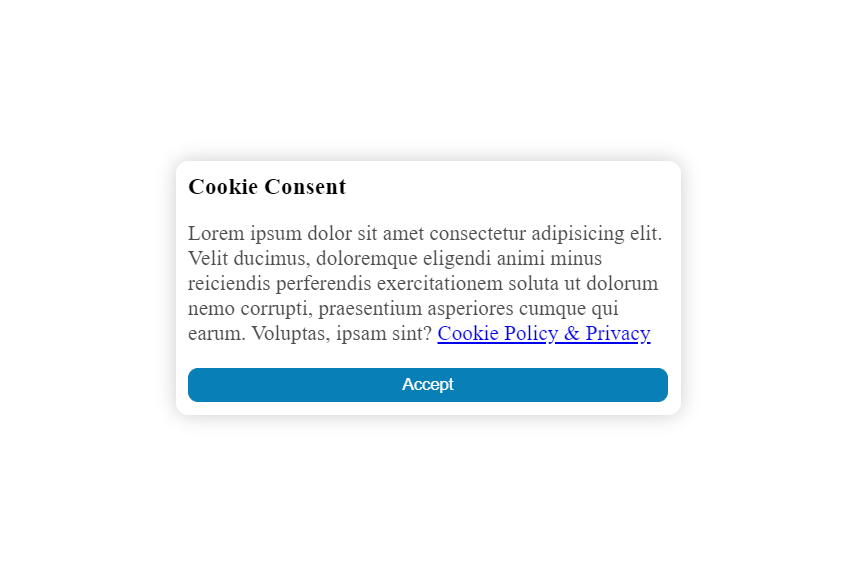
In this tutorial, we will learn how to create a clean and user-friendly Cookie Consent Popup using JavaScript, HTML, and CSS. You have probably seen this popup on many websites. It informs users about cookie usage and allows them to accept the terms before continuing. Cookies store small pieces of data like preferences or login details so your website can remember returning visitors.
We will build this popup from scratch without any external libraries. When a user clicks the accept button, their choice will be saved in the browser using cookies or local storage. This prevents the popup from showing every time the page reloads. By the end of this guide, you will understand how to design the popup interface, handle user actions with JavaScript, and provide a smooth user experience on your website.
Also read: How to add GDPR Cookie Consent in Laravel
When users come to your website, they will get a cookie consent popup and accept the cookies policy. Cookie Consent is what users must know about the cookie privacy & policy of your website.
Create a Cookie Consent Popup in JavaScript
<!DOCTYPE html>

<html>

<head>

    <meta charset='utf-8'>

    <meta http-equiv='X-UA-Compatible' content='IE=edge'>

    <title>How to Create a Cookie Consent Popup in JavaScript</title>

    <meta name='viewport' content='width=device-width, initial-scale=1'>

    <style>

        #cookieConcentPopup {

            background: white;

            width: 25%;

            position: fixed;

            left: 10px;

            bottom: 20px;

            box-shadow: 0px 0px 15px #cccccc;

            padding: 10px;

            border-radius: 10px;

        }


        #cookieConcentPopup h3 {

            margin: 0;

        }


        #cookieConcentPopup p {

            text-align: left;

            font-size: 17px;

            color: #4e4e4e;

        }


        #cookieConcentPopup button {

            width: 100%;

            border: 1px solid #097fb7;

            background: #097fb7;

            padding: 5px;

            border-radius: 8px;

            color: white;

        }


        #acceptCookieConcent {

            cursor: pointer;

        }

    </style>

</head>

<body>

    <div id="cookieConcentPopup">

        <h3>Cookie Consent</h3>

        <p>Lorem ipsum dolor sit amet consectetur adipisicing elit. Velit ducimus, doloremque eligendi animi minus reiciendis perferendis exercitationem soluta ut dolorum nemo corrupti, praesentium asperiores cumque qui earum. Voluptas, ipsam sint? <a href="#">Cookie Policy & Privacy</a></p>

        <button id="acceptCookieConcent">Accept</button>

    </div>


    <script type="text/javascript">


        var c_name= "Devnote";

        var c_value="Devnote Tutorials";

        var c_expire_days= 15;


        let acceptCookieConcent = document.getElementById("acceptCookieConcent");

        acceptCookieConcent.onclick= function() {

            createCookie(c_name, c_value, c_expire_days);

        }


        // function to set cookie in web browser

        let createCookie= function(c_name, c_value, c_expire_days) {


            let todayDate = new Date();

            todayDate.setTime(todayDate.getTime() +

            (c_expire_days*24*60*60*1000));

            let expires = "expires=" + todayDate.toGMTString();

            document.cookie = c_name + "=" + c_value + ";" + expires + ";path=/";


            if(document.cookie) {

                document.getElementById("cookieConcentPopup").style.display = "none";

            } else {

                alert("Unable to set cookie. Please check your cookies setting");

            }

        }


        // get cookie from the web browser

        let getCookie= function(c_name) {

            let name = c_name + "=";

            let decodedCookie = decodeURIComponent(document.cookie);

            let ca = decodedCookie.split(';');

            for(let i = 0; i < ca.length; i++) {

                let c = ca[i];

                while (c.charAt(0) == ' ') {

                    c = c.substring(1);

                }

                if (c.indexOf(name) == 0) {

                    return c.substring(name.length, c.length);

                }

            }

            return "";

        }


        // check cookie is set or not

        let checkCookie= function() {

            let check=getCookie(c_name);

            if(check=="") {

                document.getElementById("cookieConcentPopup").style.display = "block";

            } else {

                document.getElementById("cookieConcentPopup").style.display = "none";

            }

        }

        checkCookie();

    </script>

</body>

</html>